Prosser WA Housing Market 2026: What Falling Medians Miss
September 17, 2026
September 17, 2026
Drive north out of downtown Prosser on North Gap Road and you'll pass a building that wasn't there three years ago: an 88,000-square-foot hospital campus, opened in February 2025 on 33 acres just off Interstate 82. Prosser Memorial Health moved its main hospital operation there after seventy years in a cramped, post-World War II facility that had run out of room to grow. The new building holds the first Da Vinci 5 surgical system in Eastern Washington and a Mako SmartRobotics setup for joint replacement. Dr. David Yam, a neurological spine surgeon, joined the hospital's Spine Center. This is a $125 million bet on Prosser's north side.
Now check the same town's home price data for this fall, and you'll find something that seems to contradict all of that. Prosser's median list price in September 2026 sat at $429,000, down roughly 11 percent from a year earlier. Homes that actually closed in the three months ending in July 2026 sold for a median of $378,000, also down about 11 percent year over year, according to Redfin's tracking. Days on market for those sales stretched to 126, more than double the 51 days it took a year before.
A hospital is expanding. A workforce is growing. And home prices, on paper, are falling. Both of these things are true at the same time, and the reason isn't that one number is wrong. It's that Prosser doesn't have one housing market right now. It has two, and the headline figure blends them into something that misleads anyone reading it at face value.
Part of the confusion comes from which window you're looking through. Movoto's September 2026 figures track active listings and show that median asking price down about 11 percent year over year, with homes sitting a median of 147 days before selling, a pace that's held roughly flat for a year. Redfin's numbers track closed sales over a rolling three-month period and show a similar 11 percent decline, but with days on market for sold homes nearly tripling. A third tracker, aggregating a full trailing twelve months of closed sales, put the median at $439,557, up about 1 percent from the twelve months before that.
None of these figures are wrong. They're measuring the same market with different shutter speeds. The twelve-month average is still showing a touch of growth because it includes stronger months from late 2025 that haven't rolled out of the calculation yet. The three-month and point-in-time snapshots are catching the correction as it's happening right now. If you only read the trailing annual number, you'd think Prosser is holding steady. If you only read this month's snapshot, you'd think it's sliding hard. Both readings come from real data. Neither one, by itself, tells you what's actually going on.
There's a second reason the median swings around more in Prosser than it does in a place like Kennewick or Richland: volume. Only 28 homes sold in Prosser in July 2026, down from 36 a year earlier, per Redfin's count. In a market that thin, one or two unusually priced closings, a discarded vineyard sale, an estate liquidation, a builder's spec home moving below cost to clear inventory, can shift the median by tens of thousands of dollars in a way that would barely register in a market posting hundreds of monthly sales. The Tri-Cities region as a whole sold 331 homes in May 2026 alone, with a median sold price of $449,900. Prosser's entire monthly sales count wouldn't move that regional number much. But Prosser's own median is built on so few transactions that composition, not underlying value, can be doing most of the work in any given month.
That distinction matters if you're comparing Prosser's numbers to a larger Tri-Cities town and wondering why the swings look so much sharper here. They're not necessarily sharper in reality. They're just less averaged out.
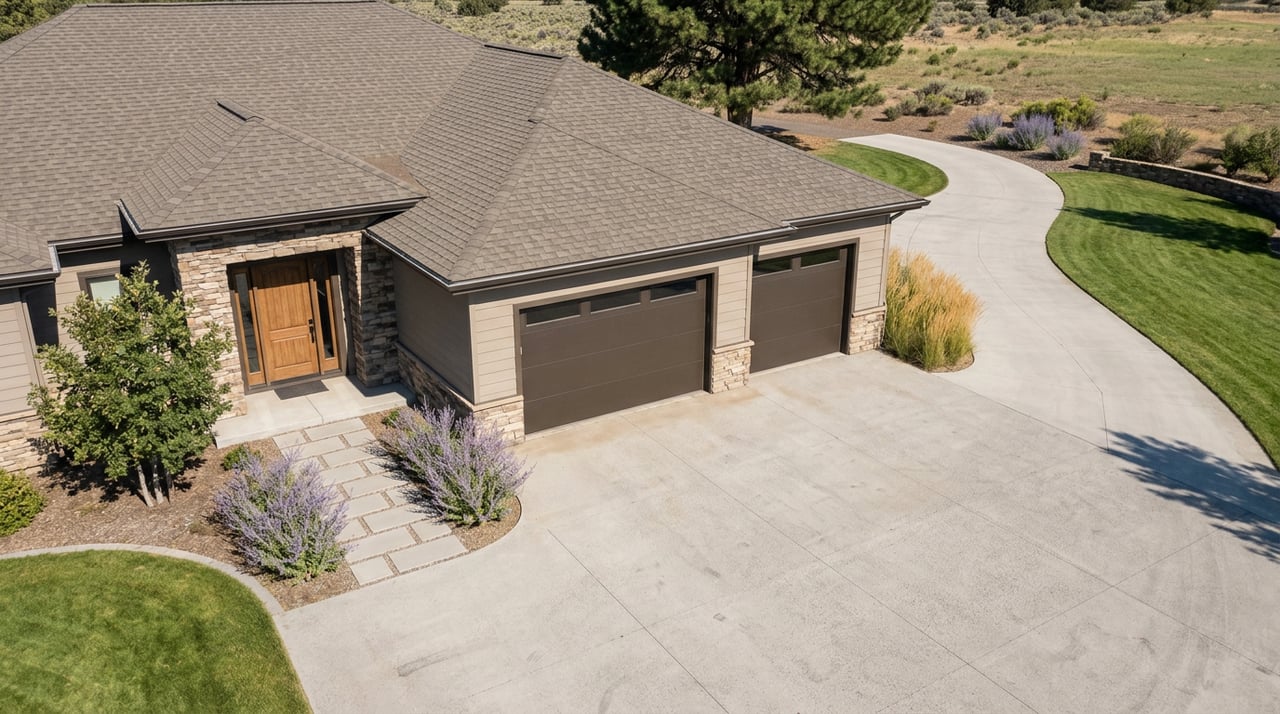
Meanwhile, the parts of Prosser's market tied to new construction and acreage are telling a different story than the resale slowdown suggests. New home communities across the Prosser area currently span a wide range: roughly $294,990 to $1,289,000, across 27 communities and nine builders, according to new-construction listings tracked this year. That's not a market retreating. That's a market with builders actively pricing for both a starter buyer and a move-up buyer in the same town, at the same time.
Land tells a similar story from a different angle. Listings for acreage near Prosser have averaged around $37,459 per acre this year, while land specifically marketed as vineyard ground has averaged closer to $11,813 per acre. That gap isn't a typo. A buildable view lot with road access and utilities in place is priced for its use as a future homesite. A working vineyard parcel is priced closer to what it produces as agricultural ground, even when it sits in the same wine country a few miles away. Buyers comparing the two need to know which value they're actually paying for, because the acreage figure alone won't tell them.
Put the hospital's growth, the new-construction price spread, and the acreage pricing together, and a pattern emerges that the median completely obscures: Prosser is adding higher-wage jobs and higher-end housing product on its north side while its existing in-town resale stock, often older and smaller, sits longer and sells for less. Both of those are real markets. The median just isn't built to describe two of them at once.
If you're comparing Prosser's roughly $378,000 to $429,000 median against a larger market's $449,900, the raw gap makes Prosser look like the value option, and for a lot of buyers it genuinely is. But that comparison only holds if you're shopping the same kind of home in both places. A buyer looking at Prosser's in-town resale inventory, the segment currently sitting for 126-plus days, is shopping a slower, more negotiable corner of the market. A buyer looking at new construction near the hospital corridor or acreage in the surrounding wine country is shopping a segment that's pricing more like the regional median or above it, builders in Prosser are already asking up to $1.29 million for some new homes.
Neither segment is the "real" Prosser market. They're both it. The practical takeaway is to ask which segment a listing actually belongs to before you compare its price to anything else you've seen, in Prosser or in a neighboring town. A home's days on market, its distance from North Gap Road, and whether it's resale or new construction will tell you more about what you're actually paying for than the citywide median ever will.
Prosser Memorial Health isn't finished growing, either. The hospital's old campus, now called the South Campus, is being reused rather than sitting vacant. It already houses the Spine Center, Comprehensive Pain Management, and Ear, Nose and Throat services, and a new Preoperative Assessment Clinic is scheduled to open there in the fall of 2026. That's a second, smaller wave of activity in the middle of town, on top of the new campus to the north. Whether that translates into stronger in-town resale numbers over the next year or two is genuinely worth watching rather than assuming.
If you're weighing a move to Prosser, whether you're eyeing an in-town resale home, a new build, or a few acres with a view of the Horse Heaven Hills, the median is a starting point, not an answer. Shana Brown works across Prosser and the rest of the Tri-Cities and can walk through what a specific segment of this market is actually doing before you write an offer. Get your free home valuation to see where your situation fits into the picture.
Stay up to date on the latest real estate trends.
Get assistance in determining the current property value, crafting a competitive offer, writing and negotiating a contract, and much more. Contact me today.