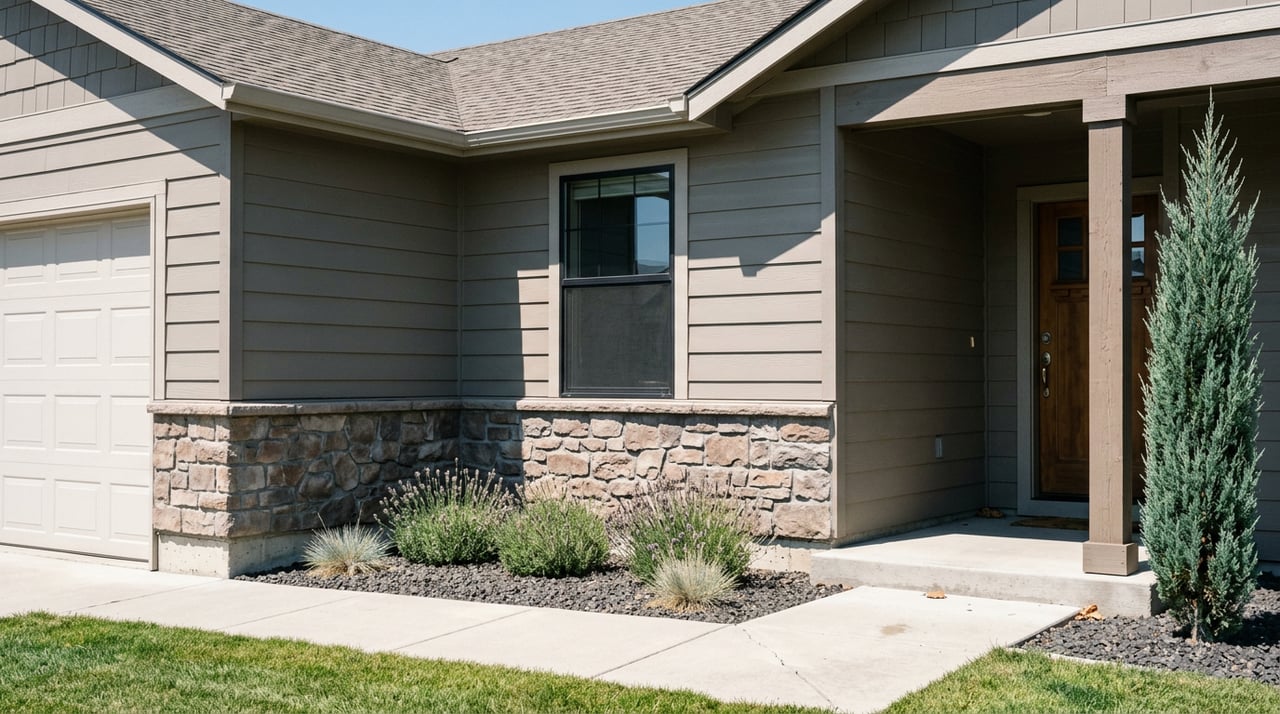
Richland Alphabet Houses Real Estate: What Buyers Should Ask
August 20, 2026
August 20, 2026
A buyer touring two Richland listings this summer might see the same word in both descriptions: alphabet house. Same era, same rough square footage, maybe even the same letter designation. One appraises cleanly and closes in three weeks. The other stalls when the lender's appraiser flags the foundation and the buyer's loan officer starts using the word "conventional" in a tone that means "not FHA." Same letter. Very different Tuesday.
The reason has nothing to do with charm, curb appeal, or which street corner the house sits on. It comes down to how the house was actually built in 1943, something no MLS listing sheet mentions and most buyers never think to ask.
Richland's alphabet houses exist because the federal government needed housing fast for the Hanford Engineer Works during World War II, and Spokane architect Gustav Albin Pehrson was handed an almost impossible brief: design an entire town, including streets, utilities, schools, and homes, in under 90 days. He produced 22 distinct floor plans, each assigned a letter, and construction started within weeks. The first house, a B-type, was occupied on July 30, 1943.
By 1945, more than 4,300 of these homes existed. The letters told the government which rank of Hanford employee got which floor plan. A supervisor got a D or a G. A foreman got an A or a B duplex. The letter was a rationing system, not a construction spec.
That distinction matters today because Pehrson's original designs, the ones built on site with quality Douglas fir shipped from Oregon, are a different animal from the houses that filled the gap when demand outpaced what Pehrson's crews could build fast enough.
To keep up with a population that grew from roughly 6,500 to more than 15,000 people in a single year, DuPont brought in nearly 1,800 additional houses that were never part of Pehrson's plans at all. These prefab units were assembled off site in Portland, shipped by rail in 8-foot sections, and lowered onto vacant Richland lots by crane. Pehrson himself disliked the idea, feeling the prefabs had none of the architectural character he'd built into his own designs, and he worried about the divide they created between neighborhoods closer to the river and the prefab blocks farther out.
The practical difference shows up below the floor line.
| Pehrson site-built homes | Prefab units (types U and V) | |
|---|---|---|
| Foundation | Permanent, built for the site | Post-and-pier, no permanent foundation |
| Exterior walls | Full stud-frame construction | 2x2 framing |
| Materials | Oregon-sourced Douglas fir | Lightweight shipped assemblies |
| Known issues | Age-related wear typical of 1940s construction | Dust infiltration, reported roof loss in early windstorms |
A house with a post-and-pier foundation and 2x2 walls isn't automatically unsafe or unlivable. Plenty have been renovated and reinforced over eight decades of ownership. But it is a different starting point for anyone financing the purchase, and that's where the letter on the listing stops being useful information.
Both FHA and conventional appraisal standards require a home to have an undamaged foundation as part of minimum property standards. An appraiser who identifies a post-and-pier foundation with no permanent footing on a prefab-era Richland home isn't being difficult. They're following the same checklist they'd apply anywhere else in the country, and a foundation flagged as a defect can hold up financing until it's addressed, sometimes through repair, sometimes through renegotiation between buyer and seller.
This is the piece that rarely makes it into a casual conversation about alphabet houses. Buyers hear "historic," picture a well-built 1940s home with good bones, and assume financing will be routine. For a Pehrson-designed original, it usually is. For one of the roughly 1,800 prefab units, the foundation type alone can be the difference between a smooth conventional loan and a financing conversation that takes an extra two weeks and an extra inspection.
If you're touring a Richland alphabet house and the listing doesn't specify which type it is, that's a question worth asking before you write an offer, not after your lender's appraisal comes back with conditions.
One neighborhood of 162 alphabet houses, largely unchanged from their original design, was named to the National Register of Historic Places in April 2005 as the Gold Coast Historic District. Owning inside that boundary comes with its own set of considerations, since exterior changes in a historic district typically face more scrutiny than a comparable renovation on a non-designated block, even if the underlying floor plan is identical.
You can see the range in what's still standing. A Tri-Cities Area Journal of Business feature on the homes earlier this year pointed to an E-house at 1401 Hains Avenue that still carries its original scalloping details, and an F-house at 1417 Haupt Avenue that was briefly home to Col. Frank Matthias during the Hanford project. Local historians Teresa Knirck and Nancy Doran lead monthly history walks through these neighborhoods for Richland Parks and Recreation, and the fact that this history still draws a crowd eight decades later says something about how much these homes matter to the people who live around them.
None of that history changes what a lender sees on paper. But it does mean two questions that sound similar, "is this a historic alphabet house" and "is this in the Gold Coast Historic District," have different answers with different practical consequences for what you can change and how.
A few questions turn a charming listing into a clear-eyed one:
These aren't gotcha questions. They're the same due diligence any buyer would want on an 80-year-old home anywhere, just pointed at the specific construction quirks that make Richland's housing stock different from a typical postwar neighborhood.
As of May 2026, the median Richland home sale price over the trailing three months sat at $505,000, up 12.2% from the same period a year earlier. Listings in July 2026 carried a median asking price of $525,000, or about $259 per square foot. Alphabet houses, with their smaller footprints, often list below that median on price alone, which can make them look like the obvious value play in a market where new construction is pushing prices upward.
That's true as far as the sticker price goes. But sticker price and total cost of ownership aren't the same conversation when foundation type is in play. A buyer comparing a 1,400 square foot alphabet house against a similarly priced newer build should be comparing financing paths too, not just price per square foot.
How can I tell if a Richland alphabet house is one of the original designs or a prefab? Start with the listing history and any disclosure documents, then ask directly. A qualified inspector can also confirm foundation type during a walkthrough, which is worth doing before your financing contingency deadline.
Can you get an FHA loan on a prefab alphabet house? It depends on the foundation's current condition. If an appraiser flags it as not meeting minimum property standards, the loan won't close until the issue is resolved, either through repair or a different financing route.
Does living in the Gold Coast Historic District mean I can't renovate? It means exterior changes typically go through more review than they would elsewhere in Richland. Interior updates are generally more flexible. Anyone considering significant exterior work should check with the city before assuming a renovation plan is straightforward.
Richland's alphabet houses carry real history, the kind that still gets walking tours eight decades later. But history alone doesn't tell you what your lender will say. If you're weighing a purchase in one of these neighborhoods, or wondering what your own alphabet house is actually worth once construction type and historic status are factored in, Shana Brown can walk through the specifics with you and help you ask the right questions before you're standing at a closing table with a surprise.
Stay up to date on the latest real estate trends.
Get assistance in determining the current property value, crafting a competitive offer, writing and negotiating a contract, and much more. Contact me today.