Burbank WA Housing and Commute: What Buyers Should Know
May 14, 2026
May 14, 2026
Thinking about trading a short city drive for more open space near the river? Burbank often catches buyers’ attention because it sits close to the Tri-Cities while offering a quieter, more rural feel. If you are weighing commute time, home prices, lot sizes, and day-to-day convenience, this guide will help you sort through the real trade-offs so you can decide whether Burbank fits your lifestyle. Let’s dive in.
Burbank is an unincorporated community in Walla Walla County near the confluence of the Snake and Columbia rivers. It sits about 6 miles south of Pasco, with access near U.S. Highway 12 and connections to Interstate 395. That location gives you a practical middle ground between small-community living and access to the broader Tri-Cities area.
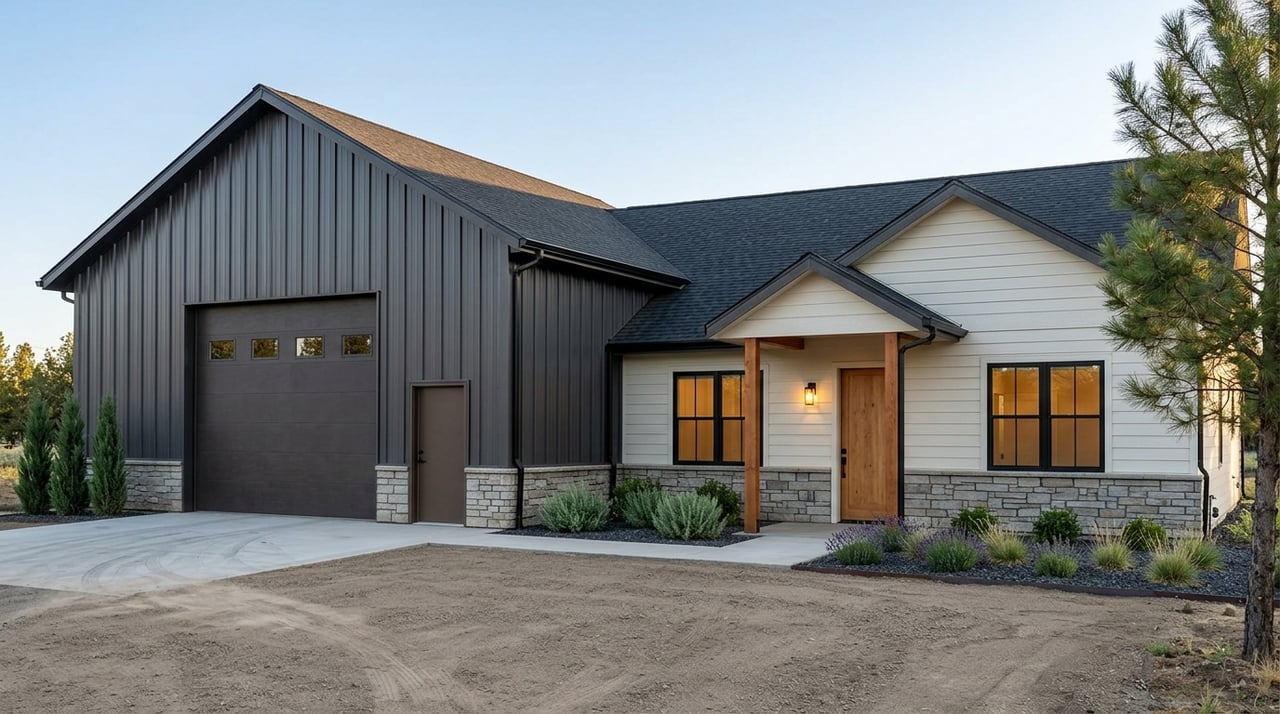
For many buyers, the appeal starts with space and setting. County and state materials describe the area as a mix of rural residential land, irrigated crops, dryland farms, shoreline areas, parks, trails, campsites, and open space. If you want room to spread out and a less built-up environment, Burbank can feel very different from a more conventional suburban neighborhood.
If you work, shop, or travel through the Tri-Cities often, commute reality matters. A useful benchmark is the drive from Burbank to Tri-Cities Airport in Pasco, which is about 13 minutes by car. That helps show why many buyers see Burbank as close enough for regular access to the region.
At the same time, Burbank is still a largely car-dependent area. Census-based data shows that 79% of workers drive alone, and the average commute time is 29.8 minutes. WSDOT also identifies Tri-Cities peak travel windows as 6 to 8 a.m. and 3 to 6 p.m., so timing can shape your daily experience.
The main east-west connection is SR124/US12, which links Burbank with the rest of the region, including the Tri-Cities and Walla Walla. WSDOT describes this corridor as a rural minor arterial and notes it is above the congestion threshold. Partner feedback has also called for more passing lanes and turn lanes in Burbank Heights.
That means the drive is manageable for many households, but it is not always effortless. If you want a home in Burbank, it is smart to test the route during the times you would actually travel most often.
Transit options exist nearby, but most residents still rely on personal vehicles. Ben Franklin Transit serves near the I-182/US12 corridor, and WSDOT notes that two park-and-rides are easily accessible. Even so, the area’s commute pattern remains strongly car-oriented.
If you want to reduce drive time stress, access to park-and-ride locations may help in some situations. But for most buyers, Burbank works best when you are comfortable planning life around a car.
Burbank’s housing profile looks different from many neighborhoods in Kennewick, Pasco, or Richland. Census-based figures show 3,589 residents, 1,238 housing units, and a homeownership rate of 86.7%. That high ownership share can appeal to buyers who are looking for a more settled residential environment.
One of the biggest draws is the potential for larger lots. WSDOT describes much of the land outside Burbank as rural, and county parcel records include residential conversions on 2.1, 2.15, and 20.4 acres. That lines up with what many buyers expect when searching this part of the county.
Burbank’s location near the Snake and Columbia rivers is a real lifestyle feature, but it is important to keep expectations realistic. County shoreline analysis shows that residential development near the Snake River in the Burbank area accounts for only about 1% of shoreline jurisdiction. In other words, the setting is a major part of the appeal, but true shoreline residential opportunities are limited.
You are more likely to enjoy the area through proximity to boat launches, parks, trails, campsites, open space, and refuge land rather than through a large supply of waterfront homes. For some buyers, that is a plus because it preserves a more open feel.
Burbank is not just homes and farmland. The Port of Walla Walla’s Burbank Business Park includes 98 acres of mixed commercial and light-industrial zoning near the confluence, with lots ranging from one-half acre to 20 acres. That mixed land-use pattern is part of the local character and can influence how different pockets of the area feel.
When you tour Burbank, it helps to look beyond the house itself. Road access, surrounding land use, and parcel layout can all affect long-term fit.
A common assumption is that moving outside the core Tri-Cities automatically means lower prices. In Burbank, that is not always true. Recent Zillow data places Burbank’s average home value at $474,860, compared with $430,870 in Kennewick, $418,088 in Pasco, and $466,467 in Richland.
That does not mean every Burbank home costs more. It means you should avoid assuming geography alone creates savings. The research points to a more nuanced takeaway: Burbank’s price advantage is parcel-specific rather than guaranteed.
The data does not come from one single method. ACS 2024 places Burbank’s median owner-occupied value at $412,900, while Zillow’s figure is an average home value index. These numbers are useful for directional context, but they are not identical measures.
For you as a buyer or seller, the practical lesson is simple. Compare homes based on lot size, condition, location, access, and surrounding uses instead of relying only on broad area averages.
Property taxes can vary more than many buyers expect. In one Walla Walla County Burbank parcel sample, the total tax rate was 9.7507418138 per $1,000 of assessed value, which came to $831.73 on an $85,300 parcel before exemptions. Comparable Benton County samples showed lower total rates in Kennewick and Richland, while Franklin County reported an average 2022 tax rate of about $8.29 per $1,000 of assessed value.
The key point is that Washington property taxes are levied and collected at the county level, and the final bill depends on the parcel’s taxing-district mix. So if you are comparing Burbank with Pasco, Kennewick, or Richland, you will want to review the actual parcel rather than rely on the city name alone.
Burbank’s daily rhythm is built around proximity, not urban density. The community is part of the Tri-Cities Metropolitan Service Area, and regional materials frame the Tri-Cities as the primary retail user market. In practical terms, many residents drive into Pasco, Kennewick, or Richland for broader shopping and services.
That creates a different experience from living in a neighborhood with a deeper local retail base. You may gain more open space and a quieter setting, but you will likely trade some convenience for that lifestyle.
For buyers who value recreation, Burbank’s setting stands out. County analysis describes the confluence area as including wetlands, islands, open space, boat launches, parks, and wildlife-refuge land. That combination can be especially appealing if you enjoy being near the water or want easier access to outdoor spaces.
This is one of the clearest lifestyle advantages Burbank offers over more built-up parts of the region. It is not about walkability to shops. It is about being closer to open land and river-oriented recreation.
Burbank tends to fit buyers who want a quieter environment and who do not mind driving for work, errands, or services. It can be especially appealing if you are searching for larger-lot property, rural residential character, or access to river and open-space amenities. It may also appeal to buyers considering land or buildable-property opportunities in the broader Tri-Cities orbit.
On the other hand, if your top priority is quick access to everyday retail, lower car dependence, or a more typical suburban pattern, another part of the Tri-Cities may suit you better. The right choice depends on which trade-offs feel worth it for your household.
If Burbank is on your list, a few practical steps can help you make a more confident decision:
A careful, property-by-property approach matters here. Burbank can be a great fit, but it rewards buyers who look closely at the details.
If you want help comparing Burbank with Pasco, Kennewick, Richland, or other nearby areas, Shana Brown can help you narrow down the right location, lot type, and lifestyle fit for your goals.
Stay up to date on the latest real estate trends.
Get assistance in determining the current property value, crafting a competitive offer, writing and negotiating a contract, and much more. Contact me today.